Brick Veneer & Stone Siding Calculator — Coverage & Cost
Every brick, stone, or cultured panel is a different animal. This calculator handles all four — standard brick, thin brick, natural stone, and faux stone — with real mortar bag counts, weight per sq ft, and the right waste factor for each product.
2¼″ × 3⅝″ × 7⅝″ brick, ½″ mortar joint
⚠ Requires proper flashing, weep holes, and metal lath. Each section limited to 10 ft tall without expansion joints.
Live Order Summary
Material $24,664.5 + Labor $47,628 + Lath/Mortar $4576.5
Brick and stone are premium materials — the numbers here will help you sanity-check masonry contractor bids. But you should also run the same wall dimensions through the main siding calculator to see what vinyl, fiber cement, and wood cost by comparison. A 1,500 sq ft house in brick veneer costs roughly $30k installed — Hardie would be $15–$20k for the same coverage.
Four Masonry Siding Options — Complete Comparison Matrix
Not all masonry is created equal. Standard brick and thin brick are both brick — but the weight difference means thin brick doesn't need structural engineering. Natural stone and cultured stone both look like stone — but cultured stone cuts waste by 40–50%. Here is every critical number.
| Metric | Standard Brick Veneer | Thin Brick | Natural Stone | Faux / Cultured Stone |
|---|---|---|---|---|
| Bricks / panels per sq ft | 5.12 bricks | 5.12 bricks | 0.025 tons | 0.025 panels |
| Mortar (80 lb bags / sq ft) | 0.0156 (64 sq ft/bag) | 0.011 (91 sq ft/bag) | 0.02 (50 sq ft/bag) | 0.02 (50 sq ft/bag) |
| Weight (lbs / sq ft) | 41 lbs | 8 lbs | 15 lbs | 7 lbs |
| Lath + backing required | Metal lath + building paper | Cement board backing | Metal lath + paper | Lightweight backing board |
| Waste factor | 5% | 6% | 12% | 8% |
| Material cost / sq ft | $12–$17 | $15–$21 | $18–$26 | $10–$16 |
| Installed cost / sq ft | $24–$32 | $22–$30 | $28–$38 | $15–$22 |
| Durability | 100+ years | 60+ years | 150+ years | 30–50 years |
| Expansion joints needed | Yes, every 10 ft | Rarely needed | Yes, every 8 ft | Every 8 ft for large walls |
| Installation time / sq ft | 0.1 hrs (10 sq ft/hr) | 0.08 hrs (12.5 sq ft/hr) | 0.13 hrs (7.5 sq ft/hr) | 0.08 hrs (12.5 sq ft/hr) |
Bricks per sq ft counts only the face area — the 7⅝″ × 2¼″ face of each brick plus mortar joints. Don't try to calculate based on volume (length × width × depth) — it overcounts because mortar fills only the joints, not full cubic feet.
Standard brick veneer at 41 lbs/sq ft means a 2,000 sq ft wall adds 82,000 lbs to your house's lateral load. Most new construction handles it fine, but older homes or garage walls may need a structural engineer sign-off. Thin brick avoids this entirely.
Masonry veneer traps water that seeps through mortar joints. Without weep holes (⅜″ holes every 16″ in the bottom course), water gets trapped behind the brick, freezes, and blows out courses. It is a building code requirement in every climate zone.
Brick Veneer Coverage — The 5.12 Bricks Per Sq Ft Rule
Where does 5.12 bricks per square foot come from? A modular brick face is 2¼″ tall × 7⅝″ wide. Add a standard ½″ mortar joint on every side: 2¼″ + ½″ = 2.75″ row height, and 7⅝″ + ½″ = 8⅛″ row width. Stack those rows on a 12″ × 12″ square:
That 5.12 figure is the industry standard, verified by the Brick Industry Association. Always add 5% waste for cuts and broken bricks — a 1,000 sq ft house needs 5,120 bricks + 256 waste = 5,376.
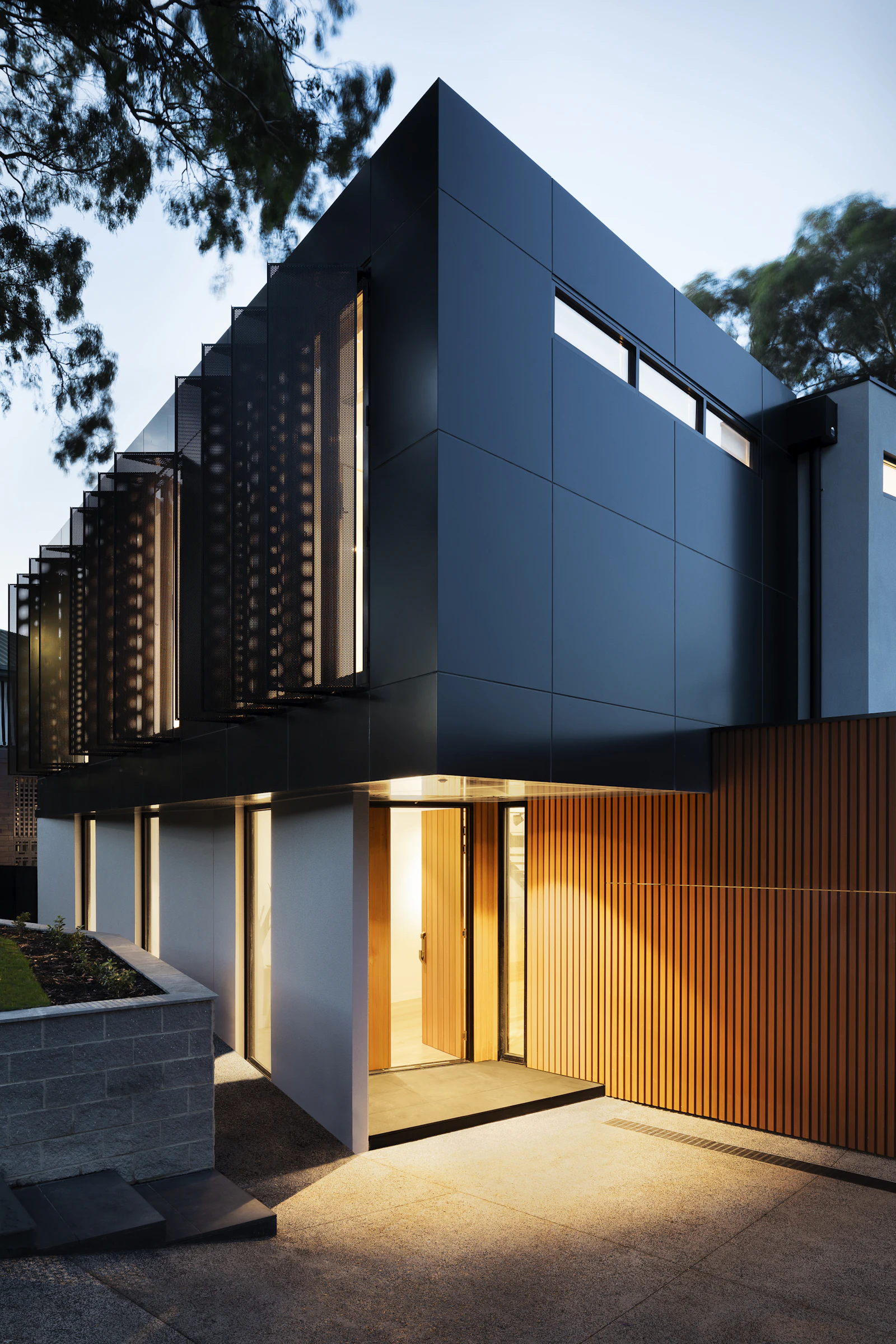 Brick veneer is a single wythe applied over the house sheathing, not a structural wallPhoto: Unsplash
Why Natural Stone Waste Is 12% (vs Brick 5%)
The 12% waste factor for natural stone is one of the single biggest budget surprises for homeowners. Here is exactly where those lost stone pieces go.
Natural Stone — 12% Waste
Cultured Stone — 8% Waste
Key insight: Every piece of natural stone is unique — installers must dry-stack the entire wall before setting any mortar to avoid mid-job size-mismatch gaps. Those stones that don't fit your pattern go back. Cultured stone panels are uniform from the factory, so every piece is useful and the dry-stack step is usually skipped or done quickly.
Frequently Asked Brick & Stone Siding Questions
How many bricks per square foot of brick veneer?▼
Standard modular brick (2¼″ × 3⅝″ × 7⅝″) with a ½″ mortar joint = 5.12 bricks per sq ft. Add 5% waste for cuts and broken bricks. A 1,000 sq ft wall needs about 5,376 bricks total.
Brick veneer vs full brick wall coverage — what's the difference?▼
Brick veneer is a single thin layer over sheathing — it is siding, not structural. A full brick wall is two wythes thick with an air gap. Veneer needs lath + flashing; a full wall needs foundation support. Veneer is $24–$32/sq ft installed, full wall costs twice that.
Stone siding waste factor by pattern?▼
Natural stone waste varies by pattern: random ashlar ≈ 10%, coursed ashlar ≈ 12%, running bond ≈ 15%. The more uniform height your pattern requires, the more stones get discarded for being the wrong height. Cultured stone waste is fixed at 8% regardless of pattern.
How many mortar bags per square foot of brick veneer?▼
One 80 lb Type N mortar bag covers 64 sq ft of standard brick veneer — that's 0.0156 bags per sq ft. Always add 10% for mixing loss. For a 1,000 sq ft house: 1,000 ÷ 64 × 1.10 = 17 bags needed.
Faux stone siding vs natural stone — which is better?▼
Natural stone is 40–60% more expensive both in material and labor, lasts 150+ years, and adds significant weight to walls (15 lbs/sq ft). Faux cultured stone is lighter (7 lbs/sq ft), cheaper, and installs faster, but only lasts 30–50 years. If your budget is tight or the wall isn't structurally heavy-duty, cultured stone is the better value.
Do I need lath under brick veneer?▼
Yes — every brick veneer installation over wood or metal framed walls requires 2.5 lb/yd² galvanized wire lath stapled to the sheathing, plus two layers of #15 building paper beneath it. The lath gives mortar a key to grab onto; the paper keeps moisture out of the framing.
Compare Other Siding Materials
Hardie & Fiber Cement
Coverage, cost, and board count for James Hardie 7.25″/8.25″...
Vinyl Siding
Vinyl Double 4, 4.5, 5 coverage tables, shake siding, board-...
Wood Siding
Cedar lap, clapboard, shake, and shingle coverage, board foo...
Metal Siding
Corrugated, ribbed, standing seam, steel lap, and aluminum s...
Board & Batten
Board width and batten spacing tables, center exposure formu...
Garage & Shed Siding
Garage and shed siding takeoff: 5 standard size presets, gar...
Linear Feet Converter
Convert siding square footage to linear feet and board feet ...
Siding Cost
Siding cost calculator for 6 materials: vinyl, fiber cement,...
Takeoff & Waste
8-step siding takeoff with waste factors by material, nail c...
Coverage & Exposure
Coverage for all 10 siding profiles: D3–D6 vinyl, lap 4–8 in...
Repair or Replace
Siding repair cost calculator: patch prices for vinyl, cedar...
Square Conversion
Unit converter for siding: square feet to squares, cartons, ...
Other Materials
Coverage and cost for less-common siding: brick veneer at 35...
Cedar Shake
Coverage, waste factor, and installed cost for cedar shake a...
Log Siding
Log siding coverage by diameter and overlap — D-log, square ...
Stucco & Cement
Two-tab calculator: stucco 3-coat cement/lime/sand mix bags ...
Mobile Home
Vinyl siding calculator for single-wide and double-wide mobi...
T1-11 & Plywood
T1-11 grooved plywood, 4x8 OSB, and plywood siding coverage ...
ROI & Value
Return on investment calculator for vinyl, Hardie, wood, and...
Gable & Triangle
Dedicated calculator for triangular gable siding — slope hei...
Related Siding Guides
Calculate Siding Without Measuring — Photo Upload, Address & Rule of Thumb Estimates
Five ways to estimate siding coverage without pulling a tape measure — satellite images, address lookup, photo upload, blueprint trace, and the 1.2× living-area rule of thumb.
How to Calculate Square Footage for Siding — Step-by-Step Formula by Wall Type
Precision tutorial: rectangular wall formula, gable formula with roof-pitch rise conversion, irregular wall decomposition, opening deductions, unit conversion chain, and waste factor stacking.
Siding Squares, Cartons & Linear Feet — Unit Conversion Cheat Sheet
Complete unit conversion chain for siding: square feet to squares to cartons to pieces to linear feet — why the trade uses five different units and how to convert between any two.